First of all, I want to give some preface to this article, I am neither an expert on Tolkien or Black metal, just a guy who really loves both. That being said with it I hope to cover the history of how two of my favorite subjects became entwined to create one of metal's greatest subgenres. Each week we will take a close look at the bands that helped create "Tolkien Black Metal" and how it evolved into what it is today.
Part 1: Origins
J.R.R. Tolkien died in 1973, a devout Catholic philologist who spent decades building an invented mythology out of grief, faith, and a scholar's love of dead languages. Fueled by his belief that his beloved England lacked its own uniquely “English” mythology, Tolkien spent most of his adult life crafting the larger tapestry we know today as "The Silmarillion". Unfortunately this wouldn't be published until after Tolkien's death, but it served as the background for his other works, "The Hobbit" and eventually "The Lord of the Rings". Tolkien would more than likely have been baffled, possibly even horrified, to learn that within just a few short decades of his passing, his invented language "Black Speech" would supply a stage name for a convicted murderer, and that his entire geography of evil would become the single most-raided proper-noun bank in an entire genre of music. This article is an attempt to explain how that happened, and why black metal specifically is the genre that did it.
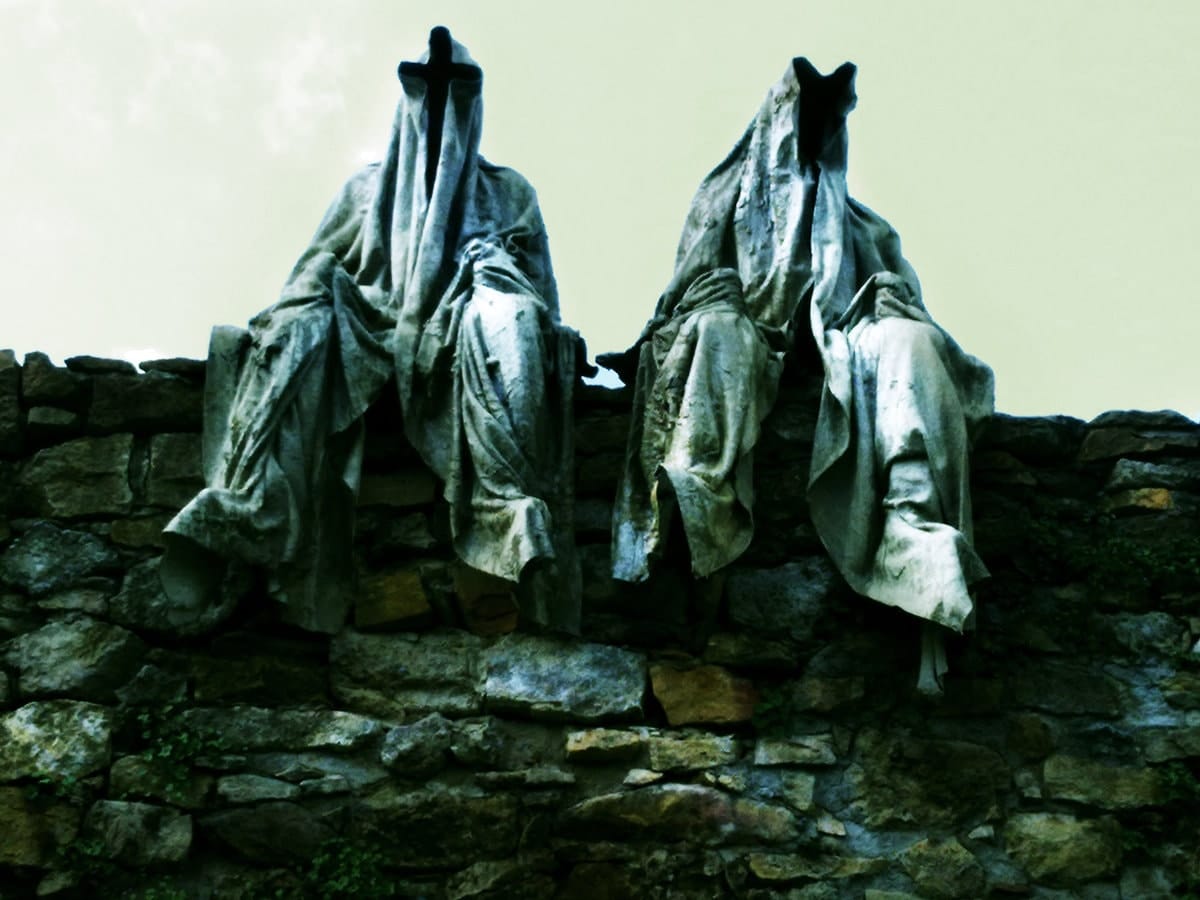
Tolkien was already metal's favorite author long before black metal existed. Black Sabbath, Led Zeppelin, and Rush had all reached for Middle-earth by the early 1970s, and heavier bands kept doing the same throughout the '80s. Mostly as filler, a fantasy flourish alongside swords, sorcery, and Norse gods, with no particular ideology attached. None of that early borrowing had black metal's later hunger. No fixation on Sauron specifically, no interest in the invented languages, no sense that Tolkien's darkness was something to actually inhabit rather than decorate a song with. That hunger needed a colder, more specific set of conditions, and those conditions arrived in Norway in the early hours of the 1990s. That's where this article truly begins.
Mordor, a name we all recognize. The ever watching eye, wreathed in flame atop a black tower and the desolate waste that surrounds it. Its inspiration didn't come entirely from its creator's own imagination. Tolkien served as a signal officer at the Battle of the Somme in 1916 and watched two of his closest friends die there. He was notoriously guarded about drawing straight lines between his life and his fiction and wasn't shy about his extreme dislike of allegory either. But later on im years he made one exception, confirming in Letter # 226 (The Letters of J.R.R. Tolkien) that the Dead Marshes and the desolate approach to the Black Gate “owe something to Northern France after the Battle of the Somme”. Corpses half-sunk in flooded ground, poisonous fumes, a landscape stripped of everything living, the terrain Frodo and Sam stumble through on their way into Sauron's realm reads, on this account, less like invented fantasy evil than a war translated into myth. That single sentence is about as close as anyone gets to a parallel for Mordor's atmosphere, and it matters here because it means the black metal bands who later mined that atmosphere were borrowing something built out of real horror, not decoration invented from nothing. Black metal has always claimed a kind of privileged access to real darkness rather than mere theatrical menace; without quite knowing it, the genre reached for a source that had made the same claim first.
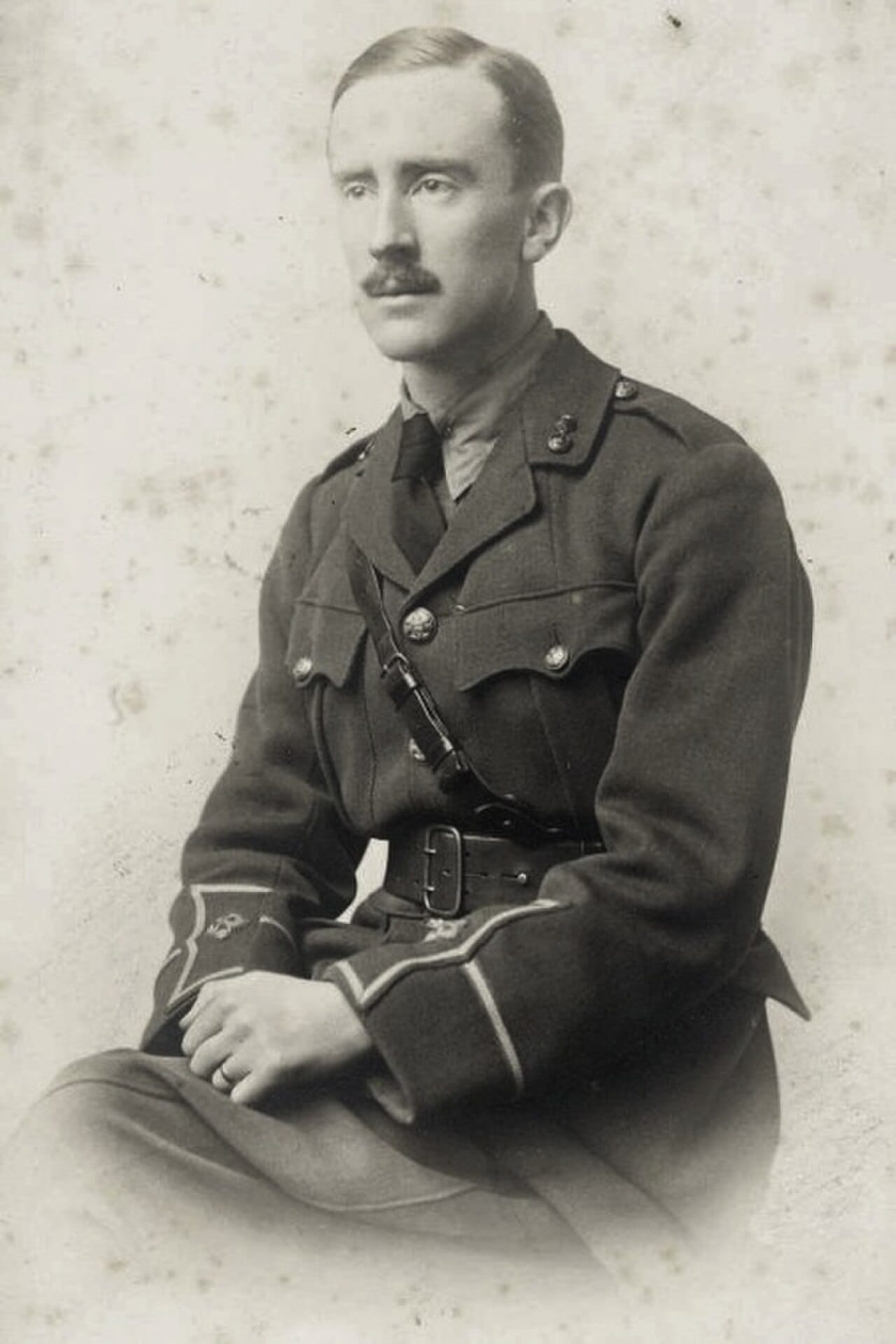
Tolkien was also, by profession, an expert in exactly the kind of pre-Christian Northern European heroism black metal keeps circling back to. He spent his academic career studying Old English and Old Norse poetry. A mythology built around a single hard idea: that true courage means standing fast against certain defeat, with no promise of victory and no reward waiting on the other side. Even the gods are eventually doomed to die. Middle-earth runs on a version of that same ethic. Galadriel names it directly in “The Fellowship of the Ring”, describing the Elves' whole struggle against time and loss as "the long defeat", a phrase that could double as a creed for black metal's entire worldview. The bleakest expression of it sits in “The Silmarillion”'s account of the House of Húrin: cursed by the fallen Vala Morgoth to watch his family be destroyed piece by piece, Húrin's children Túrin and Nienor are driven, through no real fault of their own, toward incest, dragon-slaying, and eventual suicide, a story with none of the last-minute rescue that softens the ending of “The Lord of the Rings”. It's not hard to see why a genre this fixated on bleak, cosmic pessimism would recognize its own worldview already fully built inside Tolkien's darkest First Age narrative, decades before the genre existed. Black metal has rarely borrowed the hopeful half of Tolkien's story, rather its tragedy, despair and Desolation.
There's a third connection, closer to home for a genre defined as much by its sound as by its lyrics, and it comes from the very beginning of Tolkien's invented cosmology. In the “Ainulindalë”, the creation myth that opens “The Silmarillion”, the world isn't spoken into being, it's “sung”. Ilúvatar's Ainur (angel like beings) perform a great "Music", and evil enters creation the moment the mightiest of them, Melkor, starts weaving in themes of his own: loud, discordant, and endlessly repeated, clashing against the harmony around it until it drowns out everything nearby. Evil, in Tolkien's own cosmology, is quite literally noise that won't resolve, a corruption of something that was originally whole, rather than an independent force in its own right. It's a strange, almost eerie thing for a genre defined by dissonance, distorted tremolo, and shrieked vocals arranged to sound like an assault on conventional harmony to find its source material's own founding myth already describing evil in exactly those terms. It's a connection at least one band would eventually make explicit: we will discuss that in a later portion of this article.
That same instinct, corruption as the shape evil takes, carries directly into Tolkien's constructed languages, and it's why one of them in particular became black metal's favorite. Black Speech, the language of Mordor, was built by Tolkien specifically to sound harsh, guttural, and repellent. Hard consonants and ugly clusters, designed to feel like a corruption of language itself, fitting for a tongue engineered by Sauron, who (like his own master Melkor) could only twist what already existed rather than create anything new. A genre obsessed with raw, ugly vocal delivery gravitating specifically toward the one Tolkien language built from the ground up to sound cruel isn't really a coincidence.
Part 2:
 Michael
Meanwhile, check out these albums:
Your thoughts on this article.
We love to hear your opinion about this article. You can do so by becoming a member and commenting on this post.
Or share your opinion and thoughts on our social media channels, or join the discussion on our Discord—where we talk about all things black metal. Don’t forget to follow our Facebook page, Black Metal Zine, for updates on our latest articles, and take a look at our Instagram @blackmetal.zine for concert photos and more!