If you haven't read the first chapter you can read it here;
 Michael
Part 2: The Second Wave
By the early 90s, the Norwegian black metal scene had centered itself around Oslo's "Helvete" record shop. Bergen's rehearsal spaces needed names for bands, members, and albums that sounded suitably ancient, cold, and evil. Tolkien's invented languages, as Part 1 of this article discussed, solved this problem with unreasonable efficiency: Black Speech and Sindarin already sounded archaic, and better yet, came pre-loaded with villainous connotations.
Burzum
Kristian "Varg" Vikernes is the clearest, and most troubling, example. His teenage thrash band was named “Uruk-Hai”, after Saruman's hybrid orc-soldiers, created at Isengard by cross-breeding orcs with men in one of Middle-earth's more literal acts of corruption. When Vikernes needed a stage name, he took “Grishnákh”, after a minor, treacherous orc captain from “The Two Towers”, notably not a hero, not even a memorable villain, but a squabbling, opportunistic creature who dies ignobly, crushed under a Rohirric horse while trying to make off with the captive hobbits for his own gain. Seems befitting in retrospect. When he needed a project name, he found it in the Ring-inscription itself: "One Ring to rule them all... and in the darkness bind them." “Burzum” is Tolkien's Black Speech word for darkness itself, lifted from Sauron's own curse and repurposed as a band name.
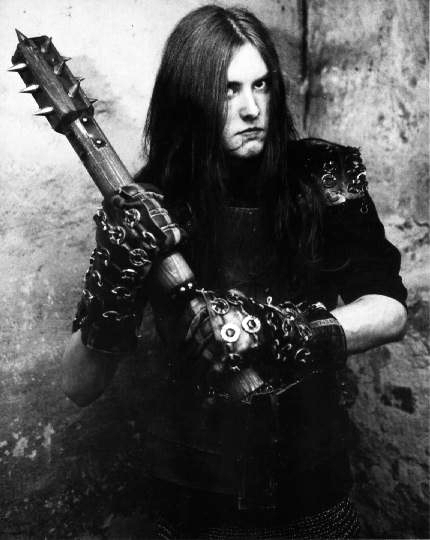
It is worth noting that these earlier examples of Tolkien appearing in black metal differ greatly from later bands. They adopted names but not so much the lore. Vikernes may be the one exception this early on and its not exactly making use of lore but rather an adaptation of a poem.
In the song "Erblicket die Töchter des Firmaments" off of Burzum's 1996 album "Filosofem" Varg draws directly from Tolkien's poem "Bilbo's Song", better known by its first line, "I Sit Beside the Fire and Think." It's the song Bilbo sings quietly in Rivendell on the night before the Fellowship sets out, after gifting Frodo his mithril-coat and Sting.
Tolkien's Original Lines: I sit beside the fire and think / of how the world will be / when winter comes without a spring / that I shall ever see.
Burzum Lyrics: I wonder how winter will be / With a spring that I shall never see / I wonder how night will be / With a day that I shall never see...
When it comes to black metal, separating the art from the artist is almost a necessity in certain cases. Burzum absolutely being one of them. But because this is important to what we are discussing, it needs to be said. Vikernes murdered Mayhem guitarist Øystein "Euronymous" Aarseth in 1994, was convicted of three church arsons, and later associated himself with a neo-Nazi organization from prison. He's been accused of "terrorism" and has been banned from just about every platform he has ever had for some form of hate speech or another.
Everything Vikernes has ever done is antithetical to the source material. Tolkien despised the Nazi misuse of Northern European mythology during his own lifetime, and his books are, at a structural level, meditations on the corrupting appeal of power and the necessity of mercy toward even the least deserving. Tolkien would have never endorsed any of these ideologies held by Varg or Black metal as a whole. The relationship seems absolutely contradictory. But somehow the darkness would take hold and this trend would linger.
Gorgoroth
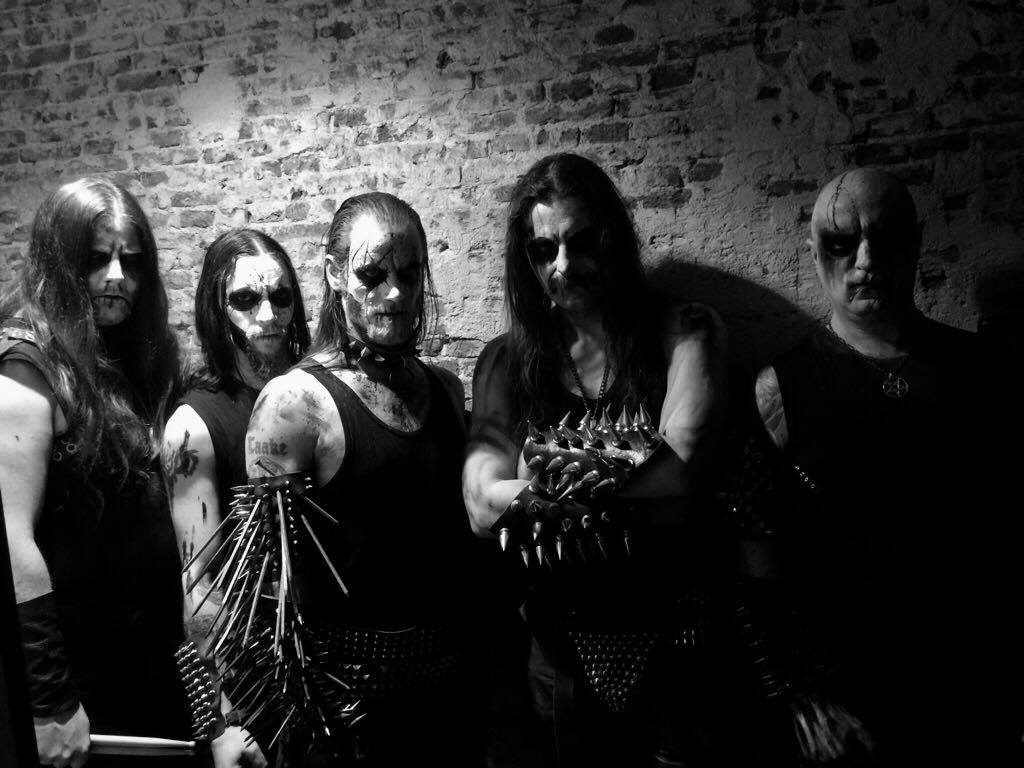
Formed in 1992 by guitarist Infernus (Roger Tiegs), “Gorgoroth” took its name from the ash-choked, fume-blackened plateau in northern Mordor. Sindarin for something close to "dreadful valley," the ground Frodo and Sam must finally cross on foot toward Mount Doom once the Black Gate itself proves unpassable. Unlike Summoning, whom we will discuss next week, Gorgoroth never published their lyrics and, as far as public record shows, never built a sustained Tolkien narrative around the name. The plateau supplied atmosphere and menace; the band supplied Satanic theater, live-show controversy, and a long-running internal legal dispute over ownership of the name itself between Infernus and former members Gaahl and King ov Hell, fought out in Norwegian courts across the 2010s until Infernus retained sole rights. Gorgoroth is the clearest example in this whole history of Tolkien-as-word-only: the plateau's fictional geography does none of the album's actual imaginative work, and the years-long legal battle over who even gets to keep using the word is, in its own way, a strange coda to a story about who gets to claim a piece of someone else's invented world.
Isengard
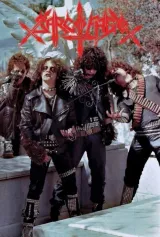
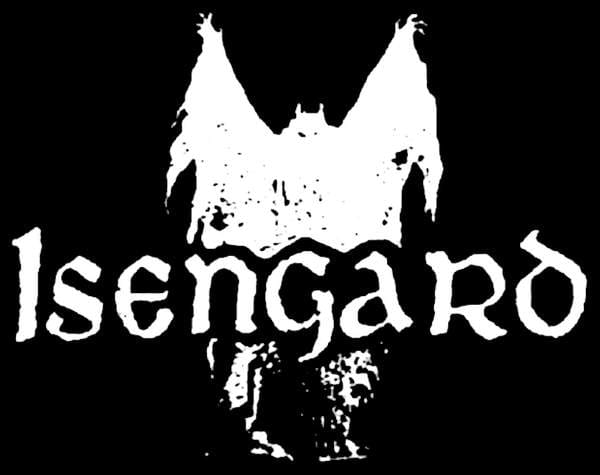
“Isengard”, founded in 1989 by Darkthrone drummer Fenriz (Gylve Nagell) as a solo outlet for material that didn't fit his main band, took its name from Saruman's fortress of stone and industry. The ring of rock at the foot of the Misty Mountains that the wizard corrupts into a proto-industrial forge of war, complete with what Tolkien's own text all but calls a factory floor of pits and furnaces, the clearest single image of despoiled nature anywhere in the legendarium. Isengard's logo depicted Thuringwethil, the vampire-messenger of “The Silmarillion”, copied from an old tabletop game called Middle-earth Role Playing. Across three full-lengths, “Spectres Over Gorgoroth” (1993, its own title borrowing the same Mordor plateau Infernus's band would make its own name), “Vinterskugge” (1994), and “Høstmørke” (1995). Isengard wandered through black metal and folk-tinged experimentalism without ever settling into a Middle-earth narrative; much like Gorgoroth, the name did atmospheric work that the lyrics didn't follow up on.
Nargaroth
Not every apparent Tolkien connection survives scrutiny, and it's worth including one as a caution against over-reading. The German black metal band “Nargaroth”, founded by René "Kanwulf" Wagner, shares its name with “Nargothrond”, the underground elven stronghold. Named for the river beside it, the hidden city Finrod Felagund builds and Túrin Turambar later helps destroy through pride and concealed identity, is one of the bleakest single narrative threads in the entire legendarium. The band's own statement, however, is hat "Nargaroth" derives from a word meaning "nature." Whether this is a deliberate distancing from an obvious Tolkien reading, an independent coincidence, or folk etymology asserted after the fact is genuinely unclear. The lesson: a Tolkien-shaped echo in a black metal band name is not automatically a Tolkien reference, and the genre's own mythologizing about itself is not always reliable.
There are a few other examples this early on but mostly just subtle nods towards the legendarium, none that would commit thematically beyond borrowing the names of places and characters, though. For that, the genre needed a very different kind of band, one that treated Tolkien not as a name bank to mine but rather as a world to actually inhabit.
Previous Articles
 Michael
Next Chapter
 Michael
Signup to our newsletter and Social Media
Below you can sign up to our newsletter(s) one of those is The Infernal Records, a weekly newsletter where Fractal our dedicated researcher finds new releases of the previous week that are worth your time. You can sign up here:
We also love to hear your thoughts and opinions on our articles, so feel free to follow us on our social media channels. Or join us on Black Metal Promotions, Discord. Where we talk about all things black metal.
You can find us on the following social media outlets:
Facebook: https://www.facebook.com/blackmetalzine/
Instagram https://www.instagram.com/blackmetal.zine/
Threads: https://www.threads.com/@blackmetal.zine