Introduction
North American black metal in the eighties takes some digging. Much of it survives on demos, with later reissues often becoming easier to find than the tapes themselves. Familiar names lead back to less familiar projects.
For this installment of Mapping the First Wave, the scope is bands active in the eighties whose music belongs to black metal or its immediate surroundings. That leaves room for the heavy metal of Satan’s Host, Goatlord’s slow decay and the speed/thrash of Witches Hammer. The boundaries were loose, and the records are more interesting for it.
United States
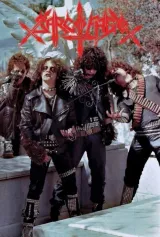
Washington’s NME released Unholy Death in 1986. Its speed and thrash foundations are easy to hear, but the ragged performances and half-buried vocals give it a nastiness that makes the black metal connection just as clear. The guitars scrape against the drums, and the whole thing sounds close to coming apart.
“Of Hell,” “Evil Dead” and “Blood and Souls” suit the recording. There is little distance between the subjects of the songs and the ugly sound used to deliver them. Even when the riffs settle into something recognizable as thrash, the atmosphere remains foul. A cleaner recording might make the playing easier to follow, but it would be hard to separate this album from the noise surrounding it.
NME came from the Federal Way and Tacoma area, well outside the cities that usually dominate accounts of American eighties metal. Unholy Death appeared as an independent LP and remains a useful starting point for this part of the series. It catches black metal taking shape within raw speed and thrash, years before the better-known American recordings of the early nineties.
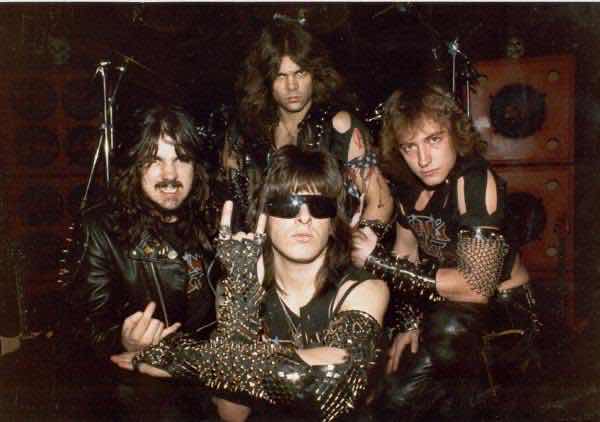
Colorado’s Satan’s Host belongs to the occult heavy metal side of the story. Metal from Hell (1986) has high, theatrical vocals and guitar work rooted in traditional metal. The Satanic presentation is overt, and the music gives it enough conviction to carry an entire record.
This is a different listening experience from NME. The appeal comes through the singing, the riffs and the atmosphere of a heavy metal album steeped in devil worship. Its place beside the rougher bands reflects how broadly the first wave could operate. Listeners approaching it through later black metal may find the vocals a surprise, but that older heavy metal language is part of the period’s character.
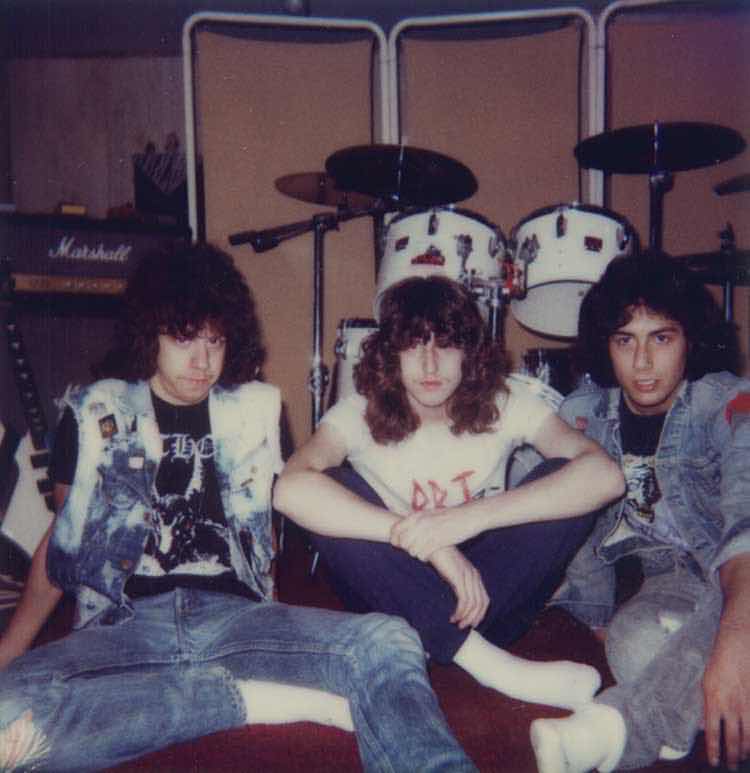
The northeastern thread begins before Profanatica. Paul Ledney and John Gelso’s Toten recorded Misery in 1987 and Macabre in 1988. Crude repetition and grotesque vocals already suggest the direction Ledney would take further. These are worth hearing as early American black metal recordings in their own right, as well as for their connection to what followed.
In a retrospective interview, Ledney names Hellhammer, Sarcófago and Possessed among Toten’s influences, alongside punk and hardcore. He also remembers the difficulty of finding compatible local bands to play with. The influences were available on records and tapes, even when there was little opportunity to find a place for the music on a local bill.
Blood Thirsty Death’s The Body of Christ (1988) belongs beside those Toten demos. Guitarist Brett Makowski and bassist Aragon Amori subsequently played in Incantation and became founding members of Profanatica. Their early black/death recording adds another piece to that history. Following the musicians back through these projects reveals how much was already underway before Profanatica formed in 1990.
Las Vegas’s Goatlord brought a slower, sicklier sound to the underground. Demo ’87 (1987) and Sodomize the Goat(1988) mix black metal with doom and grotesque death metal. The second tape leans further into the dragging tempos associated with the band, an approach described in its reissue notes as an early black/doom sound.
The weight matters here. Goatlord’s slower passages let the ugliness hang around, giving the riffs time to become oppressive. Placed alongside the faster bands in this article, the demos make a welcome change of pace without easing the atmosphere. Both began as demos, though later reissues can make them look like conventional album entries in a discography.
Kansas City’s Order from Chaos developed a black/death style with interests extending beyond familiar Satanic imagery. Crushed Infamy (1989) captures the band during its demo years, before the albums that established its wider reputation.
In an interview with Chuck Keller and Pete Helmkamp, both discuss the freedom of working outside a large organized scene while trading tapes internationally. That combination gave them contact with other musicians and listeners without requiring them to fit a dominant local sound.
The musicians themselves resist an easy classification, which is worth respecting. Crushed Infamy belongs here for its connection to the black/death underground, and for the early stage of a band whose later work became important within it. The demo is the place to begin when keeping the focus on the eighties.
Von’s early history runs from Hawaii to San Francisco. Accounts of the band’s beginnings differ, but the Satanic Demo is generally dated to 1989. That uncertainty deserves to stay attached to the tape, especially when discussing a band so often drawn into arguments about who came first.
The music is spare and repetitive. Riffs return with little interest in decoration, and the crude recording leaves the songs sounding bare. The repetition can become hypnotic, though it also asks a lot of listeners accustomed to the changing riffs and technical playing associated with Bay Area thrash. Von’s approach depends on how long a simple idea can hold its menace.
The better-known Satanic Blood demo followed in 1992, and much of Von’s international reputation grew after the eighties. Keeping those two recordings separate makes the chronology easier to follow. The later tape carried the band’s influence further; Satanic provides the earlier foundation. There is enough in that history without having to settle the entire question of American black metal’s origins around one band.
Canada
Vancouver’s Blasphemy had been developing since 1984 when it recorded Blood Upon the Altar in 1989. The demo is one of the strongest records in this survey. Frantic drums, thick guitars and submerged vocals crowd the recording, with very little relief between the bursts of violence.
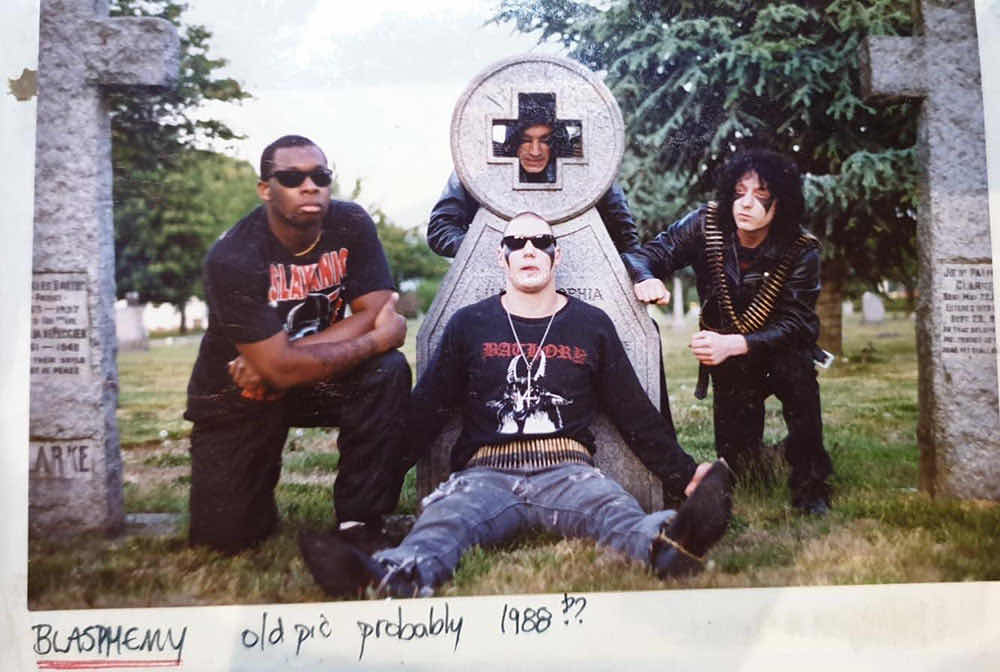
The demonic names and imagery belong to the same world as the music. What makes the tape so effective is how completely the performance sustains that atmosphere. It is difficult to pull out any single element as the source of its force; the instruments and voices bear down together.
The reissue notes name Bathory, Sodom and Slayer among the influences, alongside Brazilian extremity, particularly Sarcófago, and grindcore. For a series moving from South America to North America, that Brazilian connection is especially useful. It shows an exchange already happening through recordings, with Blasphemy taking those influences somewhere increasingly violent.
The terms bestial black metal and war metal would later help describe the sound and its descendants. Blood Upon the Altar is the eighties recording to hear first. Fallen Angel of Doom.... followed in 1990, carrying the attack onto a full-length album.
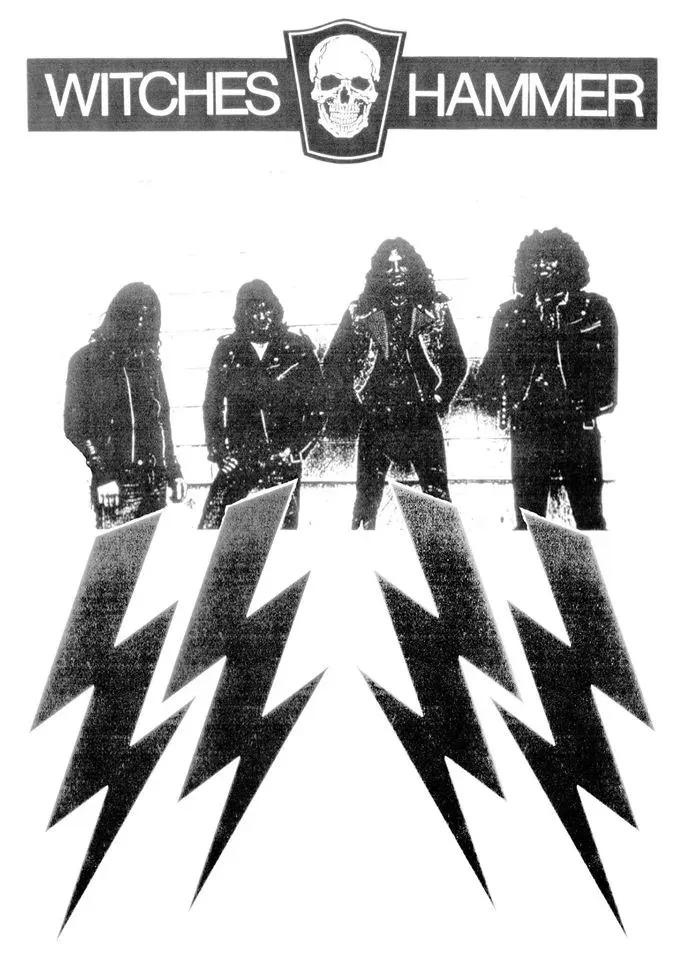
Witches Hammer gives this part of the story some local background. The band’s self-titled demo (1985) and EP (1987) document Vancouver’s abrasive speed/thrash underground. Guitarist Traditional Sodomizer of the Goddess of Perversity also played in Witches Hammer before appearing with Blasphemy on Fallen Angel of Doom.... The shared musician connects two records that might otherwise end up in separate accounts of the city’s metal history.
Essential Recordings
These recordings offer a starting point for North America’s first wave black metal underground. NME — Unholy Death (1986), album Satan’s Host — Metal from Hell (1986), album Toten — Misery (1987) and Macabre (1988), demos Blood Thirsty Death — The Body of Christ (1988), demo Goatlord — Demo ’87 (1987) and Sodomize the Goat(1988), demos Order from Chaos — Crushed Infamy (1989), demo Von — Satanic (generally dated 1989), demo Blasphemy — Blood Upon the Altar (1989), demo Witches Hammer — self-titled demo (1985) and EP (1987)
Signup to our newsletter and Social Media
Below you can sign up to our newsletter(s) one of those is The Infernal Records, a weekly newsletter where Fractal our dedicated researcher finds new releases of the previous week that are worth your time. You can sign up here:
We also love to hear your thoughts and opinions on our articles, so feel free to follow us on our social media channels. Or join us on Black Metal Promotions, Discord. Where we talk about all things black metal.
You can find us on the following social media outlets:
Facebook: https://www.facebook.com/blackmetalzine/
Instagram https://www.instagram.com/blackmetal.zine/
Threads: https://www.threads.com/@blackmetal.zine