The Current Wave: "Tolkien Black Metal" as its own subgenre
Setting our synthesizers aside, lets return to black metal proper, the latter of which has caught up to its own dungeon synth spin offs. Something has shifted in the last five or six years. For most of its history, "Tolkien black metal" was a description you'd apply retroactively to a scattered handful of bands — a lens critics used, not a box bands checked for themselves. That's no longer true. Encyclopaedia Metallum, the genre's most-used database, now lists "Tolkien" as a standalone lyrical-theme tag alongside "Satanism" or "Death" — bands actively self-identify under it, labels market records with it, and Bandcamp and Last.fm both carry a "Tolkien black metal" tag with an active, growing roster attached. What used to be Summoning's solitary decades-long project, gradually joined by fellow travelers like Avathar and Emyn Muil, is now a recognizable, reproducible scene in its own right.
One of Nine:
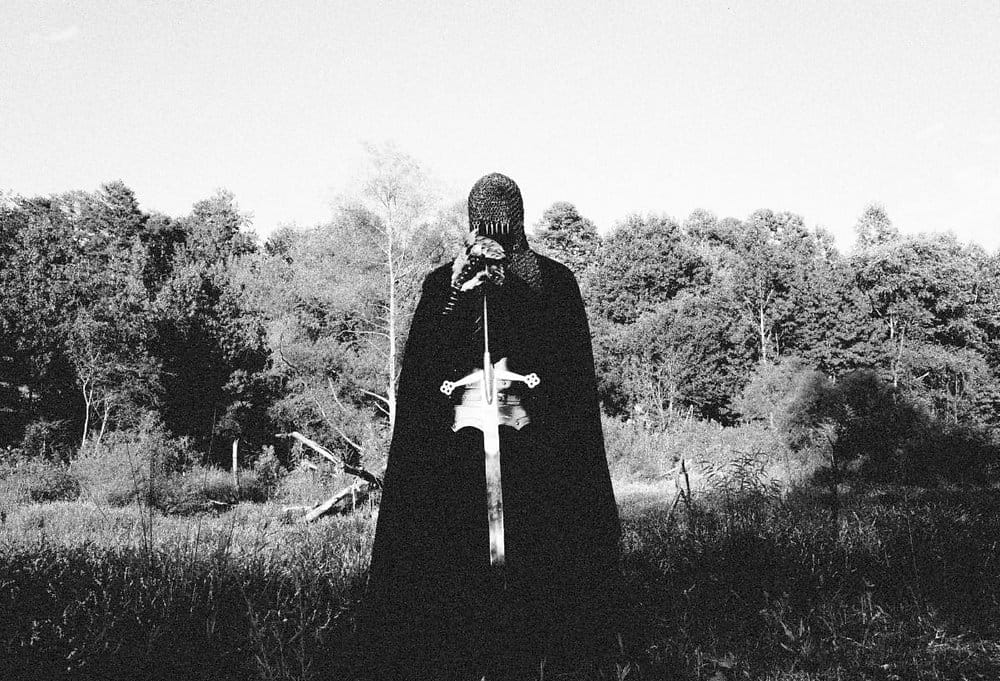
The clearest evidence of that shift is "One of Nine", formed in Charlotte, North Carolina, in 2022. Even the name signals intent with unusual precision: the Nine are the mortal kings who received Rings of Power from Sauron and were slowly hollowed into the Nazgûl, meaning the band is named not for a place or a word but for a "process of corruption" — a subtler, more literary choice than most of the genre's earlier place-name borrowings. Their 2023 debut, "Eternal Sorcery", arrived essentially fully formed. Reviewers immediately placed it in a lineage running through mid-90s Swedish melodic black metal — Dissection, Marduk-era aggression, the sorrow-laced melodicism of that scene — rather than through Summoning's synthesizer-led atmospherics. That distinction matters for how the album actually sounds: where Summoning buries its black metal instincts under keyboards, One of Nine keeps tremolo-picked guitar at the center and lets the Tolkien material work through riffs and structure rather than synth-pad ambience. Their 2025 sophomore album, "Dawn of the Iron Shadow", expanded the band's scope backward in time, from the War of the Ring into the First Age material of "The Silmarillion": the siege and fall of Gondolin, betrayed to Morgoth by Maeglin (depicted on the cover, illustrated by Ted Nasmith — one of Tolkien's own long-serving professional illustrators), Morgoth's curse laid upon the hero Húrin, and the quest for the Silmaril. The album was released through Profound Lore Records, a well-regarded extreme metal label without any particular prior fantasy-niche identity, which several outlets have read as a signal that One of Nine's Tolkien devotion is being taken seriously as extreme metal on its own terms.
Grabunhold:
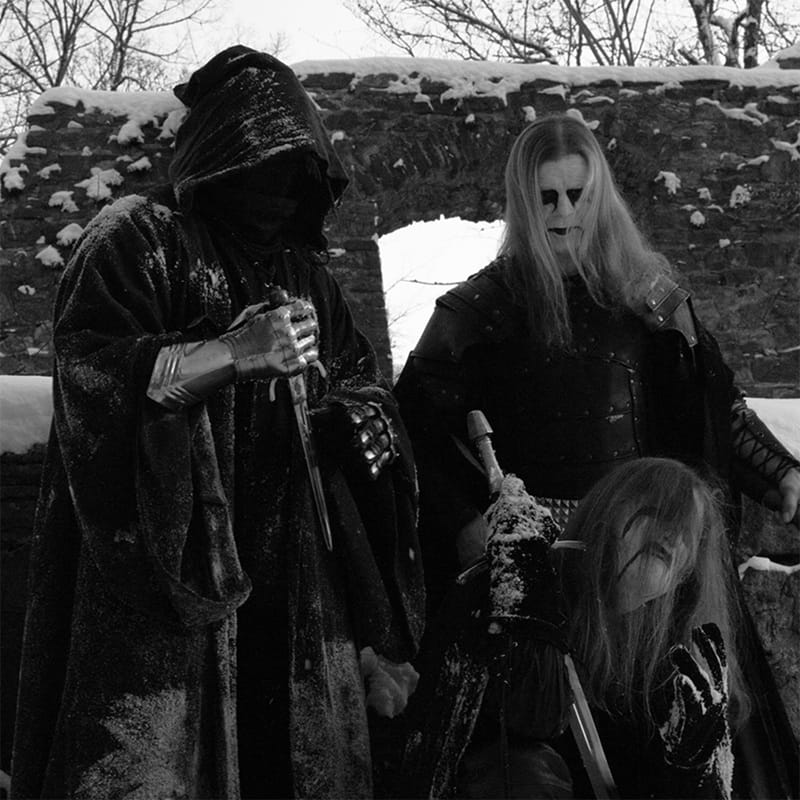
Where One of Nine works the melodic black metal lane, Germany's Grabunhold — formed in Dortmund in 2016 by a group of black metal musicians who were also self-described Tolkien enthusiasts, wanting to fuse both interests in one project — mines a rawer, more overtly retro seam. The band's name is the German rendering of "barrow-wight," the malevolent undead spirits who trap Frodo and the hobbits in the Barrow-downs early in "The Fellowship of the Ring" — creatures Tolkien's own appendices describe as evil spirits sent by the Witch-king of Angmar specifically to haunt the graves of a long-fallen kingdom of Men, one more small piece of Angmar's shadow reaching south across the centuries. Grabunhold's sound is closer to Dissection, Unanimated, and Naglfar-style mid-90s melodic black metal than to Summoning's synth-driven atmospherics. Grabunhold's catalog has built out gradually and consistently: a 2019 debut EP, "Unter dem Banner der Toten" ("Under the Banner of the Dead"); the 2021 full-length "Heldentod" ("Hero's Death"); a 2023 split with Circle of Shadows; and 2026's "Frostheim". Track titles across the catalog reference specific Middle-earth geography directly — "Wolkenbruch über Amon Sûl" ("Cloudburst over Weathertop"), "Trommeln in der Tiefe" ("Drums in the Deep," an unmistakable echo of Gandalf's warning in Moria). Grabunhold's Tolkien fixation deliberately avoids the "epic black metal" route Summoning popularized — the band stays guitar-centered rather than synth-centered even as its lyrical world remains wholly Middle-earth.
Ghül/Imladris:
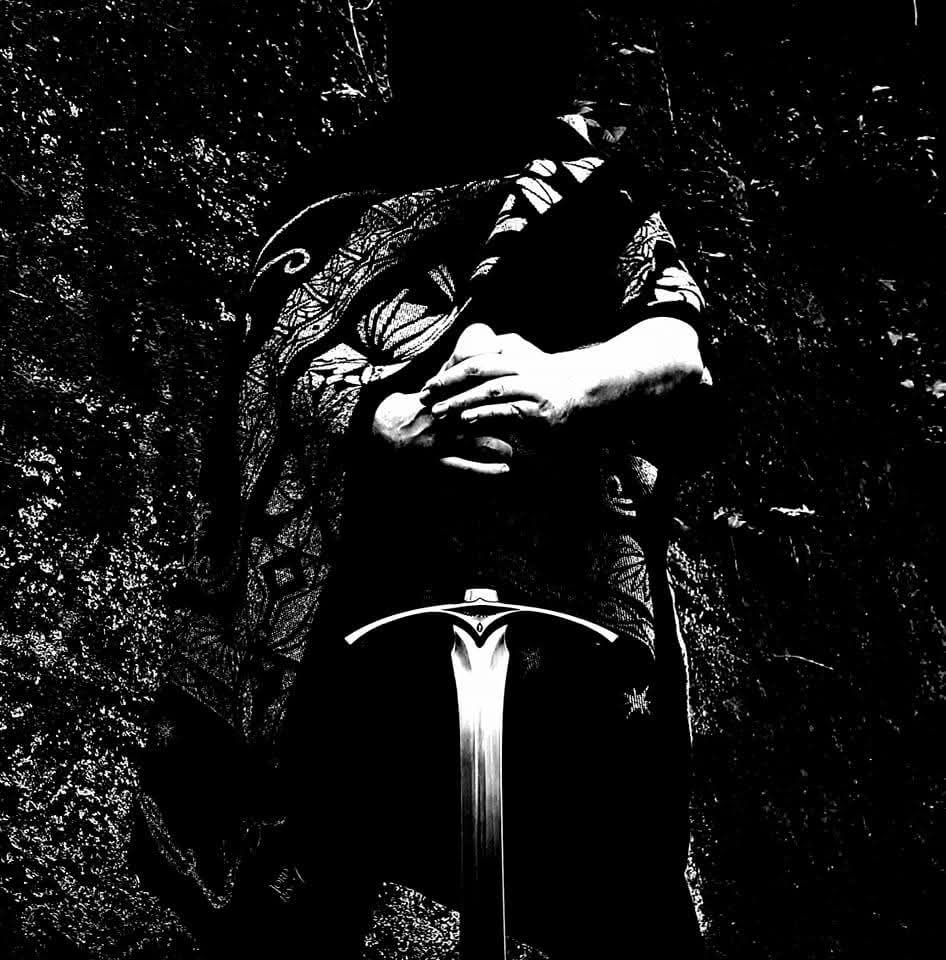
Formed in Derby, England, in 2023 Ghül is the solo black metal project of Abghül, who has taken the stage in the guise of the Witch-king of Angmar, chief of the Nazgûl. Their debut album, Land of Shadow (2023), leans directly into Mordor and Nazgûl imagery, from opening track “Under the Banner of the Black Lands” through closer “Catharsis That Follows the Storm.” Metal Archives lists the band’s lyrical themes simply as “Tolkien.” Coverage of the band’s live debut at the Chameleon Arts Cafe in Nottingham in February 2024 described a set that leaned as heavily on atmosphere and stagecraft as on the music itself, with tracks including “Necromancer” and “Thangorodrim”—Morgoth’s fortress of fire and ash, a First Age stronghold also referenced on Summoning’s Minas Morgul three decades earlier. Abghül has since expanded his Tolkien-inspired musical work through Imladris, a project that takes a more cinematic approach to Middle-earth. Named after the Elvish name for Rivendell, Imladris draws on the grand, atmospheric soundscapes of Summoning, Caladan Brood, and Howard Shore, offering a stylistic contrast to Ghül’s rawer, more experimental black metal. Its debut album, Kings of Forgotten Lore, released in July 2026, features five tracks, including “Tinúviel” and “Oathbound,” and was recorded with Abghül handling all instruments. Together, the two projects demonstrate different sides of the musician’s engagement with Tolkien: Ghül inhabits the darkness and brutality of the Shadow, while Imladris explores the more expansive, mythic atmosphere of the legendarium.
Ithil:
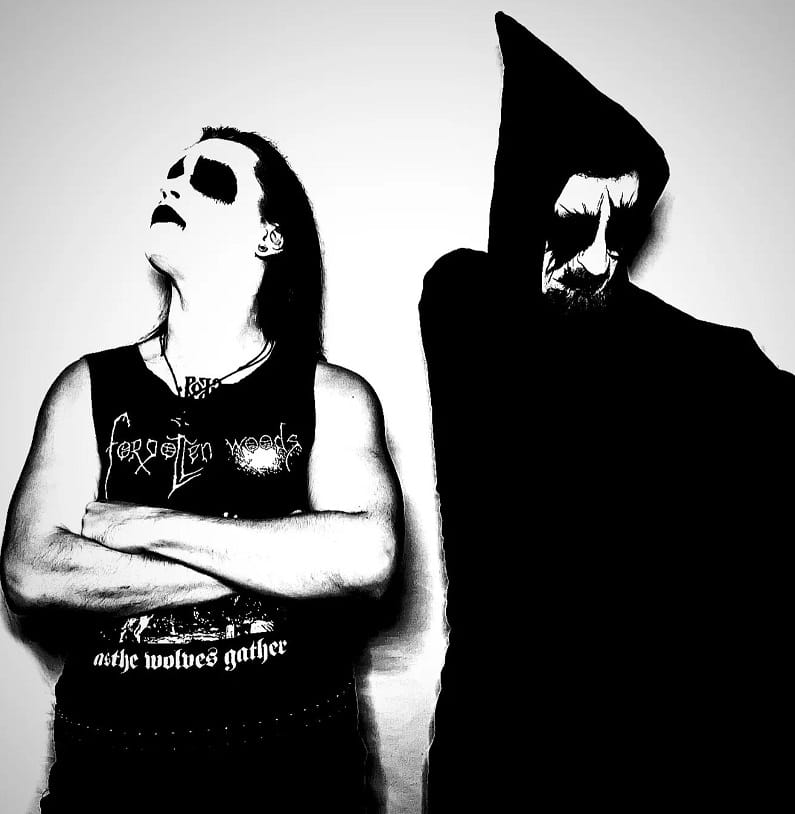
Formed in Athens, Greece, in 2023 by two musicians reviving material written more than a decade earlier, "Ithil" — a name drawn straight from Tolkien's Sindarin word for the moon, the same root behind Minas Ithil (before its fall and renaming as Minas Morgul) and Ithilien — lists its lyrical themes as an unusually wide mix: lycanthropy, Nordic folklore, "ancient Hellenic fantasy," and Tolkien. Ithil is a useful current case precisely because it resists the purer devotion of One of Nine or Ghül: Tolkien here is one thread in a self-consciously eclectic tapestry of folklore and invented myth rather than the band's sole organizing idea — evidence that even within the current wave, "Tolkien black metal" isn't a single fixed formula so much as a spectrum running from total immersion to partial, mixed-source homage.
Compared to the second wave the current crop is notably less ambivalent about its source material — every band here engages the text in some sustained way, much closer to Summoning's model than Burzum's. And compared to Summoning's own era, when this level of open devotion to a fantasy author was still a faintly embarrassing thing for a black metal band to admit to, the current wave treats it as a selling point. Tolkien black metal has gone from being one band's solitary eccentricity to a fully legitimate, self-sustaining corner of the underground.
A Closing Note
Tolkien died in 1973, two decades before any of this music existed, and could not have anticipated that his invented word for darkness would become a convicted murderer's band name, that a wasteland in Mordor would become a Norwegian black metal band's brand, or that a fortress of stone and iron would lend its name to a drummer's solo project. Nor could he have anticipated Silenius and Protector, spending thirty years turning his geography of ruin into some of the most sincerely mournful music extreme metal has ever produced — or a small international scene, decades further on, treating that same geography as settled genre convention rather than novelty. Whether all of this constitutes a betrayal of the source material, or simply what always happens when an invented mythology is powerful enough to escape its author's control and get reassembled by anyone, for any purpose, is a question that has no single answer, only a long list of bands who each answered it differently, and a list that is still growing.
Signup to our newsletter and Social Media
Below you can sign up to our newsletter(s) one of those is The Infernal Records, a weekly newsletter where Fractal our dedicated researcher finds new releases of the previous week that are worth your time. You can sign up here:
We also love to hear your thoughts and opinions on our articles, so feel free to follow us on our social media channels. Or join us on Black Metal Promotions, Discord. Where we talk about all things black metal.
You can find us on the following social media outlets:
Facebook: https://www.facebook.com/blackmetalzine/
Instagram https://www.instagram.com/blackmetal.zine/
Threads: https://www.threads.com/@blackmetal.zine